Trash and Stash
Gameplay Video
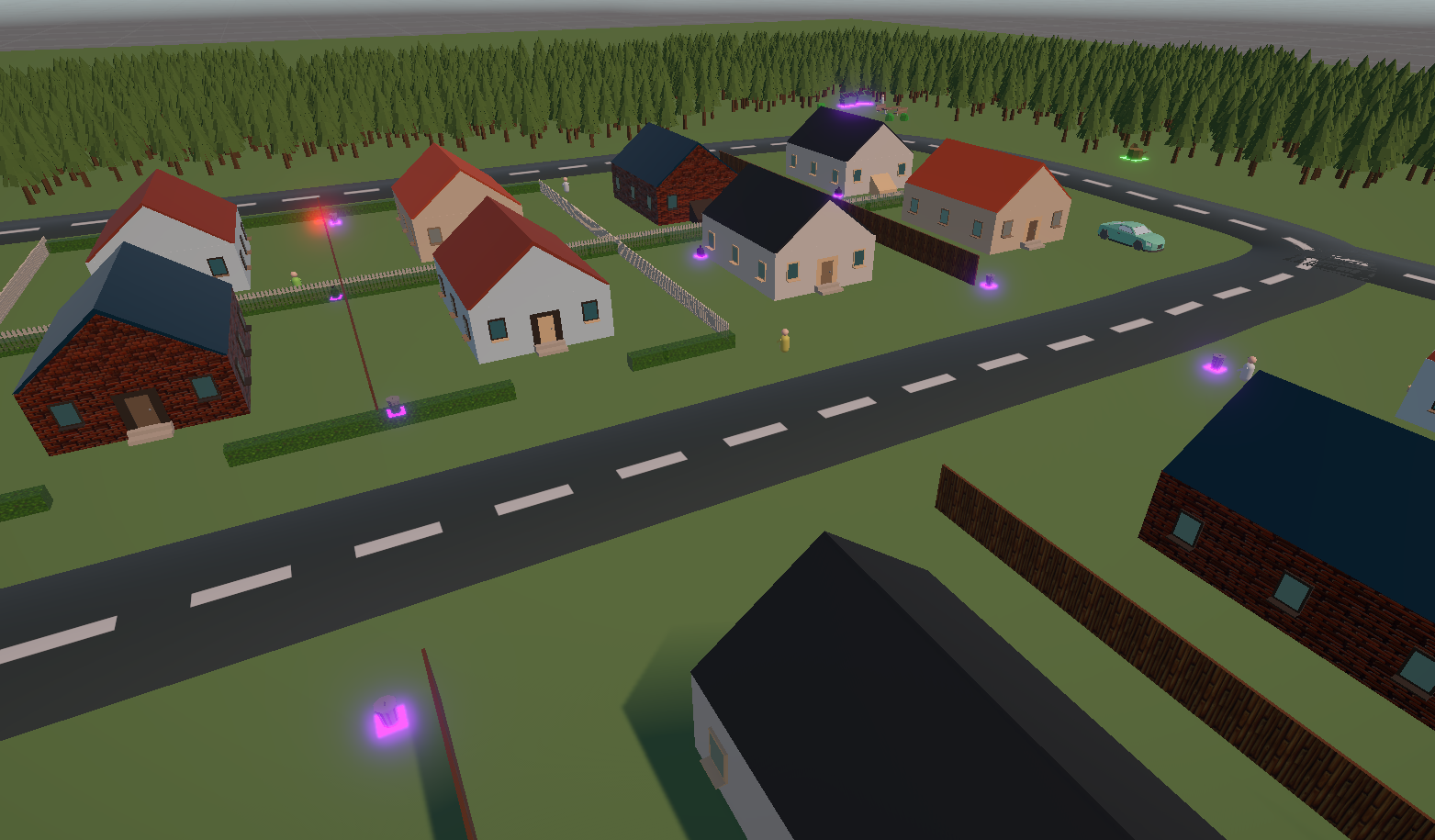
“Trash and Stash" is a prototype of a game which combines Jump’n’Run and Stealth elements. Players assume the role of a racoon scavenging suburban neighborhoods for food to have enough provisions for the winter. While doing so they should avoid encounters with the humans inhabiting the neighborhood because they might call the infamous Animal Catcher. Getting caught by the catcher means game over. In dire situations players can fling themselves out of the danger zone with the raccoon's "cannonball" special move - provided they have snatched a shrimp-power-up beforehand. I originally made this prototype as a suggestion for a potential student project at School4Games. I coded up all the game logic and designed one fully playable level with it which includes all the mechanics the game would have if further developed and published. For making this prototype I made scarce use of asset packs from the Unity asset store - like models for trees and dumpsters and a few of the textures used. Everything else I build with Unity’s primitive shapes and basic materials, including the animated models for the racoon character, humans and the animal catcher.
One Page Design Document
Level Design Process
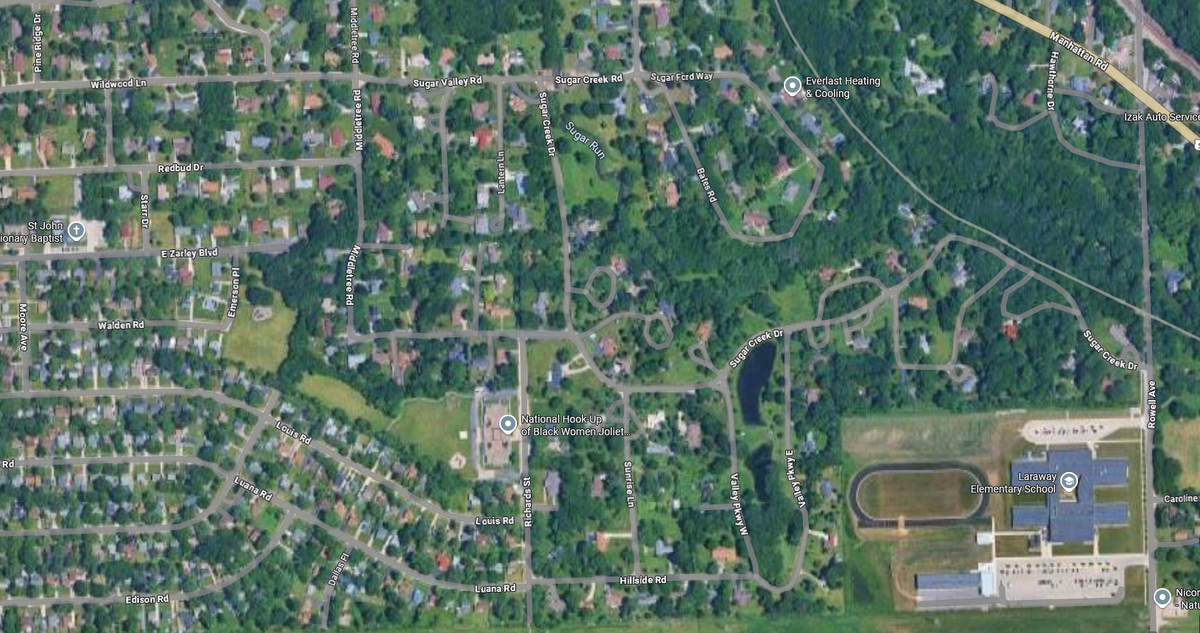
Real World Location Research
When applicable I like to look at real world places as inspirations for my level designs on Google Maps. I had employed the method before but after listening to the talk "Google Maps, not Grey Boxes: Digital Location Scouting for Untitled Goose Game" by Jake Strasser* at GDC 2021, one of the makers of “Untitled Goose Game", I was all the more convinced that this is a fruitful approach and especially suitable for this prototype.
I knew there would be plenty of source material for American “Suburbia", the setting of the game, where I could not travel to but find it on Google Maps. Furthermore, there were some parallels between the Trash and Stash Prototype and "Untitled Goose Game" and if it was helpful for the team of “House House" it would probably be helpful for me as well.
Gameplay Situations
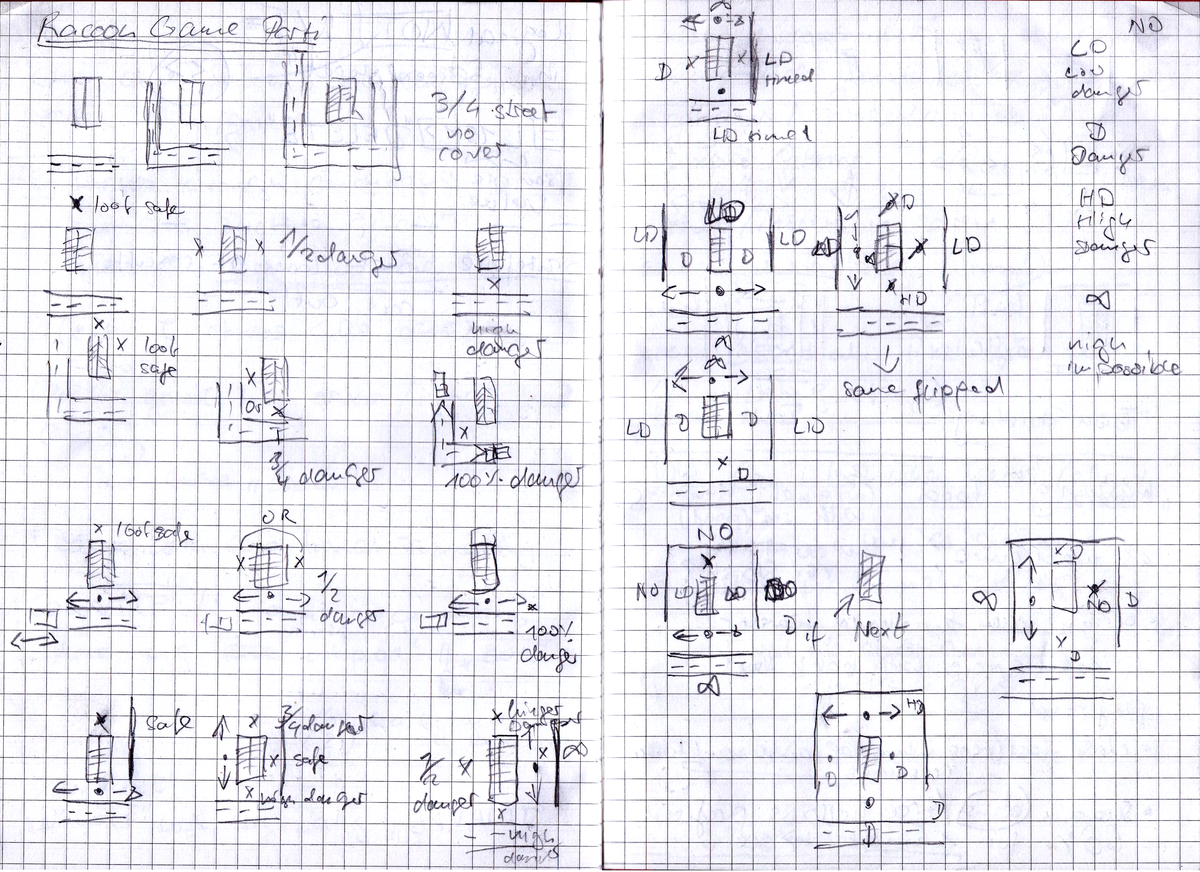
When I started to work on this game I quickly realized the mechanics of this game would not be well suited for linear level design with sequential encounters and events but instead provoke a circular design/ layout where encounters and situations could occur in any order.
This is why I decided to figure out possible gameplay situations or constellations first and sketched all possible spatial arrangements I could think of on paper - in the fashion of:
“If the character is coming from this side and the fence is here whereas the building is in this direction and the NPC which the character has to avoid is patrolling like this then the loot the character has to collect should most likely be placed here."
The resulting “parti" contained the positions of fences, buildings, NPCs and their patrol paths as well as loot spots.
Layout
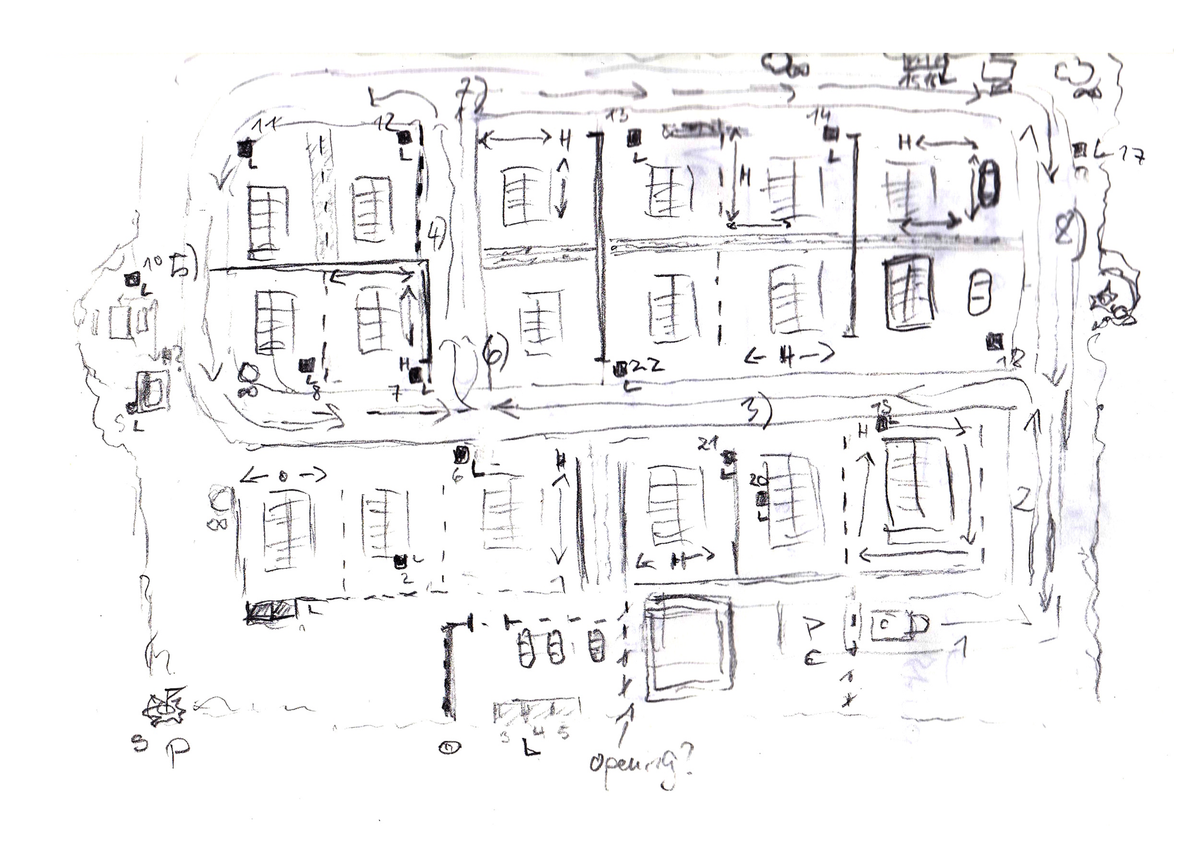
When I had a number of “parti" ready which I thought would provoke interesting gameplay situations I started to arrange them in one single layout which would make up the entire level.
In the process of creating the layout I also considered the research I had done on U.S.-American suburban areas to still create a realistic layout and not only a wild cluster of buildings and fences.
Test Scene/ Gym Level
To figure out the metrics of the level I was going to make I created a test scene in which I could establish scale proportions between characters, props and building structures. I investigated distances and spatial dimensions in relation to the characters speed, jump height and length.
In addition, I tested the camera perspective and field of view of the character in relation to the environment. Since I was also the programmer of this prototype, freshly implemented functionality was also tested in this scene like the interaction with NPCs, the Animal Catcher and the Animal Catcher Car (in combination these make up “the boss"-enemy of the game.)
Blockout
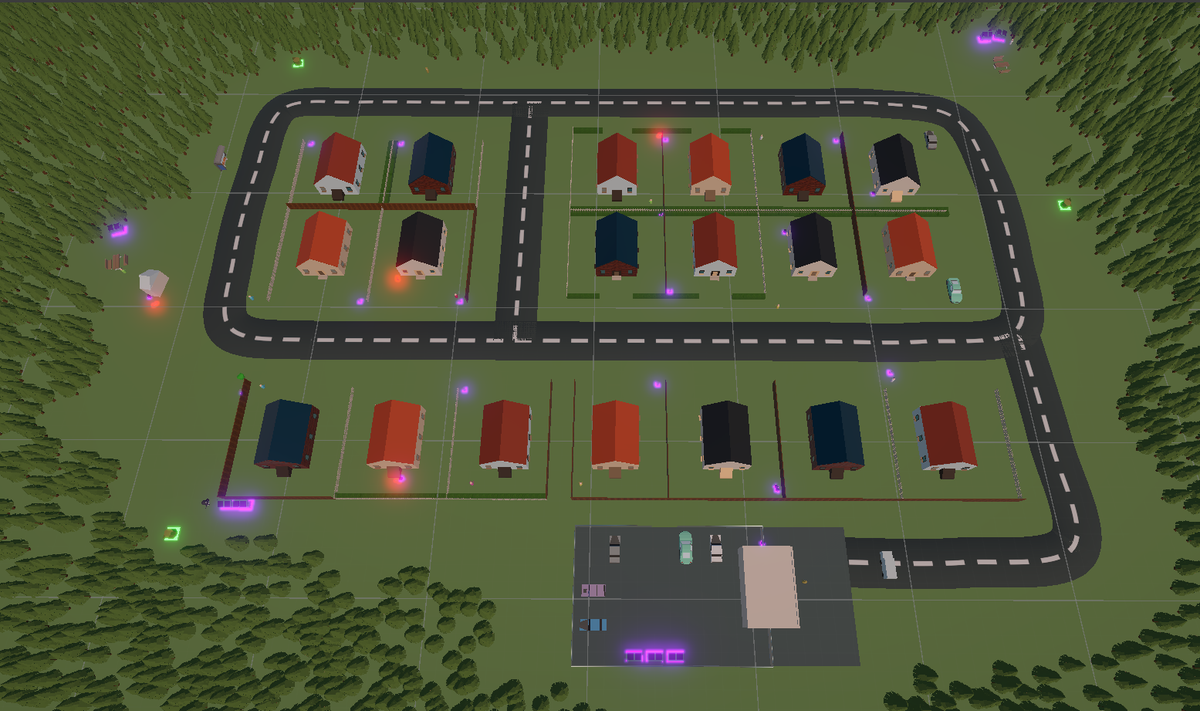
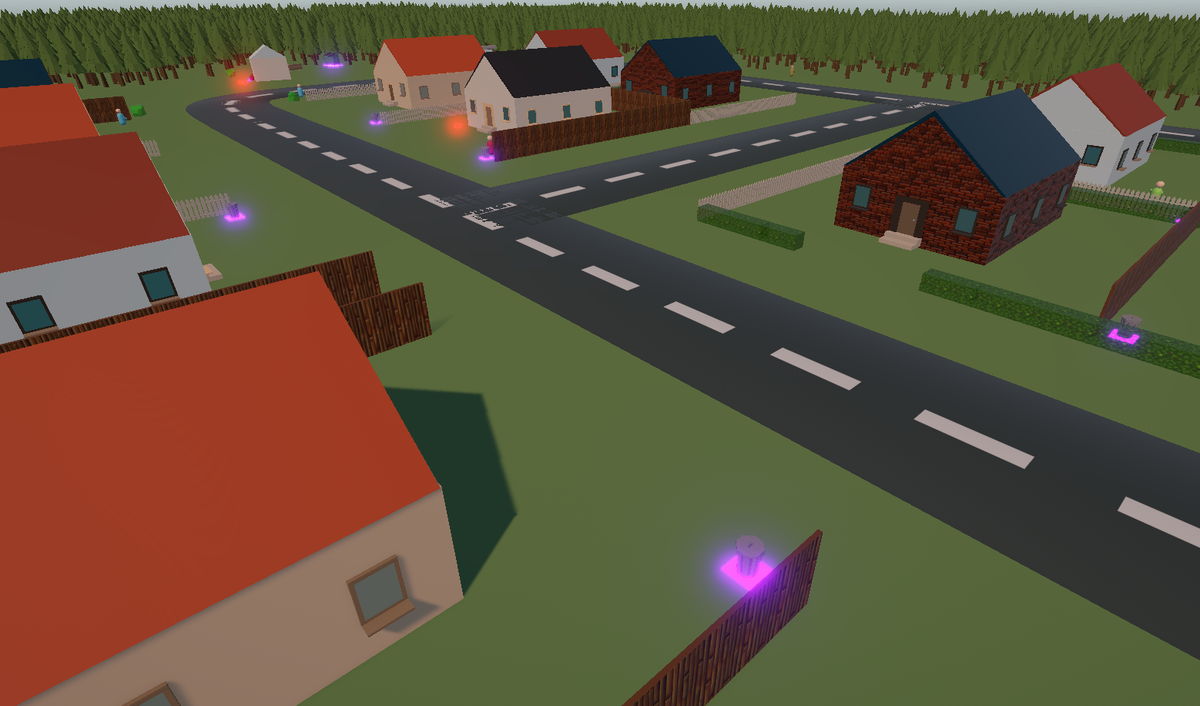
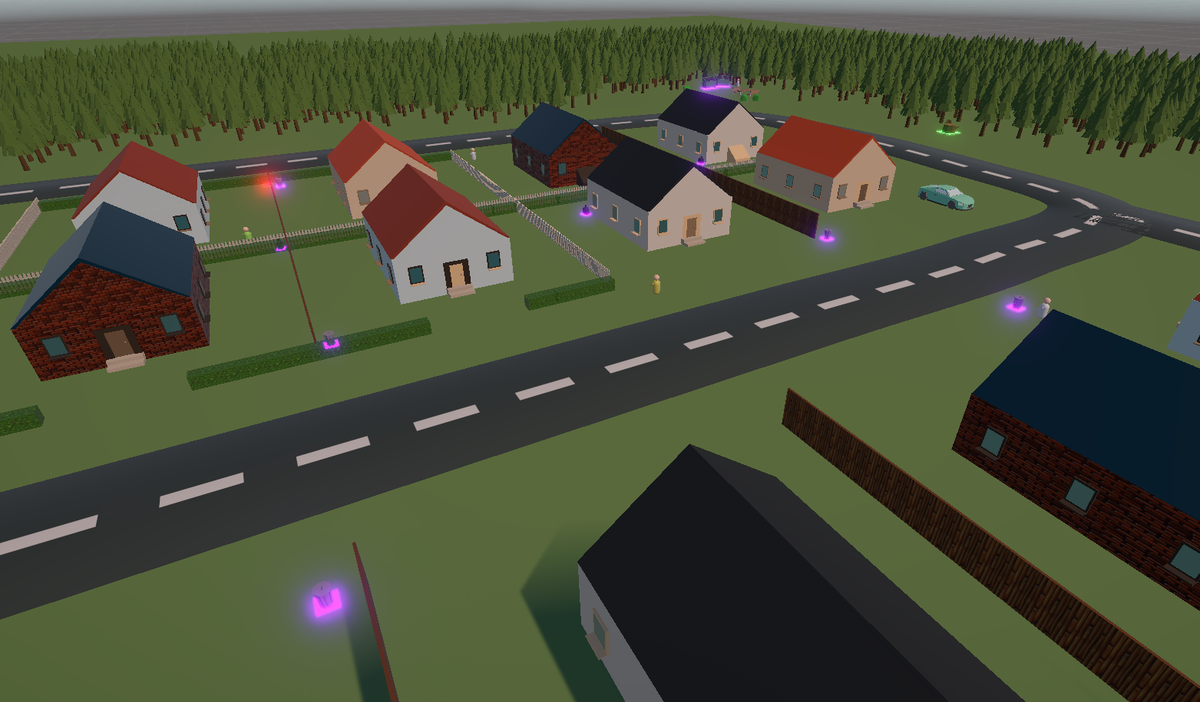
When I had the layout of the level including NPC and loot positions ready I blocked it all out in Unity and saw whether the theoretical gameplay situations I had thought of earlier actually occurred and whether they provide a rewarding challenge to overcome. - Of course, it did not play in the same way as in my imagination - though it was close - and iterations would be necessary.
During playtests with some friends and colleagues two issues came to light: 1st the level wasn’t yet challenging enough and 2nd people had some difficulty to find their way back to the objectives when they had traveled too far into “Suburbia".
A raised the challenge bar by introducing a time limit, increasing the number of NPCs and creating more bottlenecks where circumventing the danger would be not as easy.
I improved upon orientation in the level by iterating upon the locations and lines of sight to important locations/ objects and breadcrumbing the player’s way from and to the objectives (players have to bring back the loot they find to their winter stash).
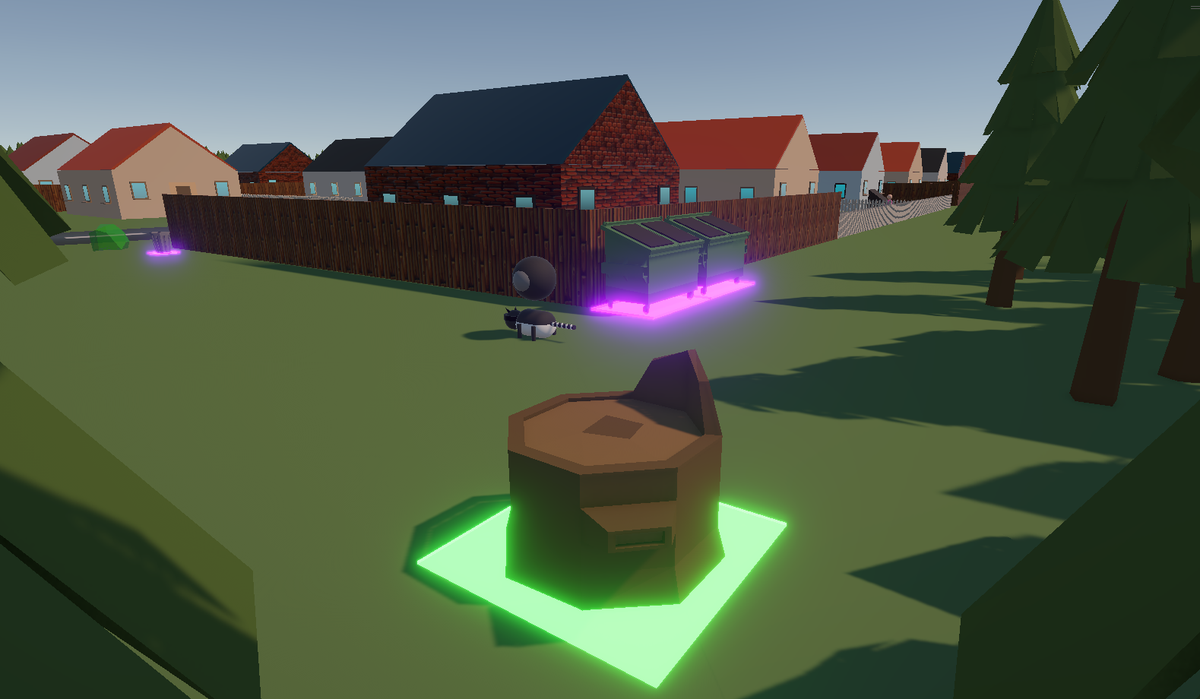
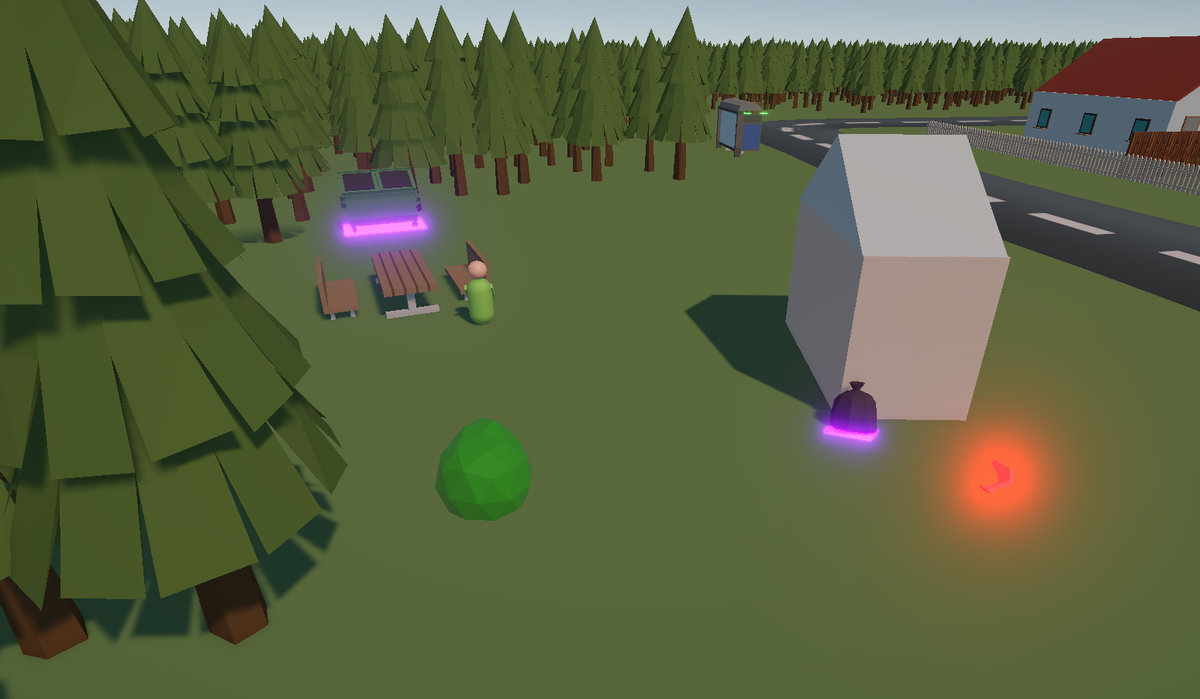
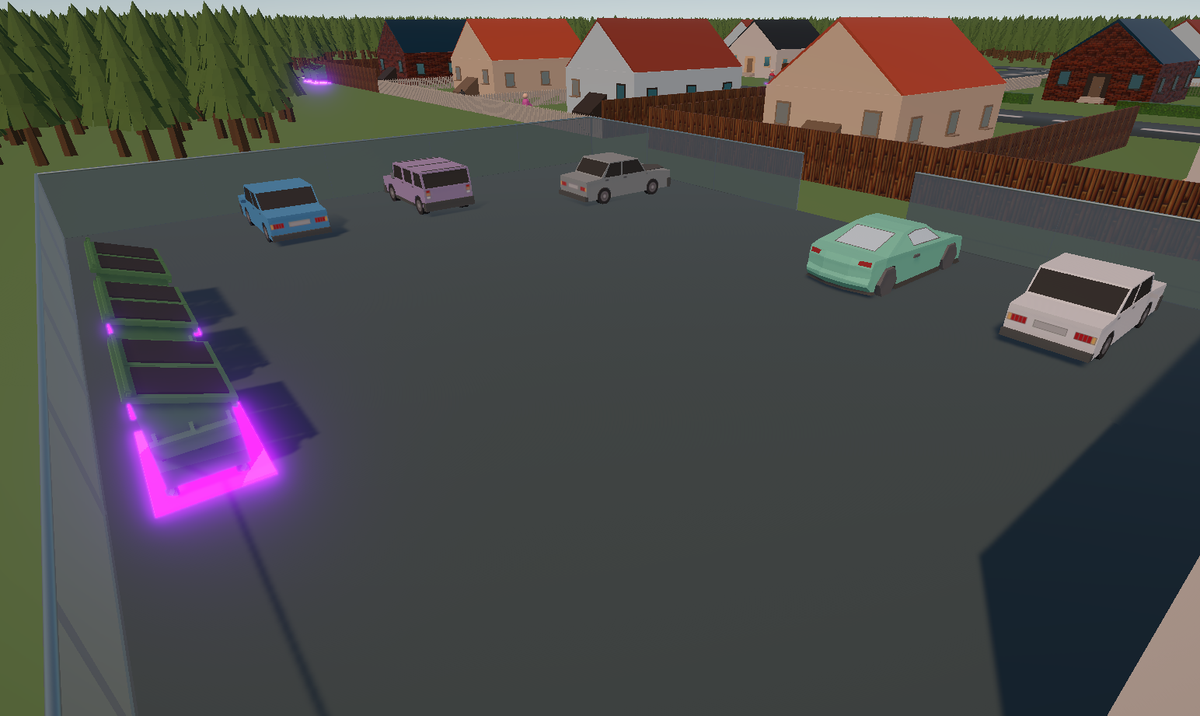
These measurements indeed improved the first version of the block out greatly.
Set Dressing
The playable level presented here is currently in the state of an advanced block out, meaning it has some color to it and some of the interactable objects are already more than just blocks - though the final set dressed version of the level is still in the making.